🔔 Bookings are open for 2026/27. Limited seats available!  4.9 of 528 reviews
 4.8 of 214 reviews
4.9 of 528 reviews 4.8 of 214 reviews 
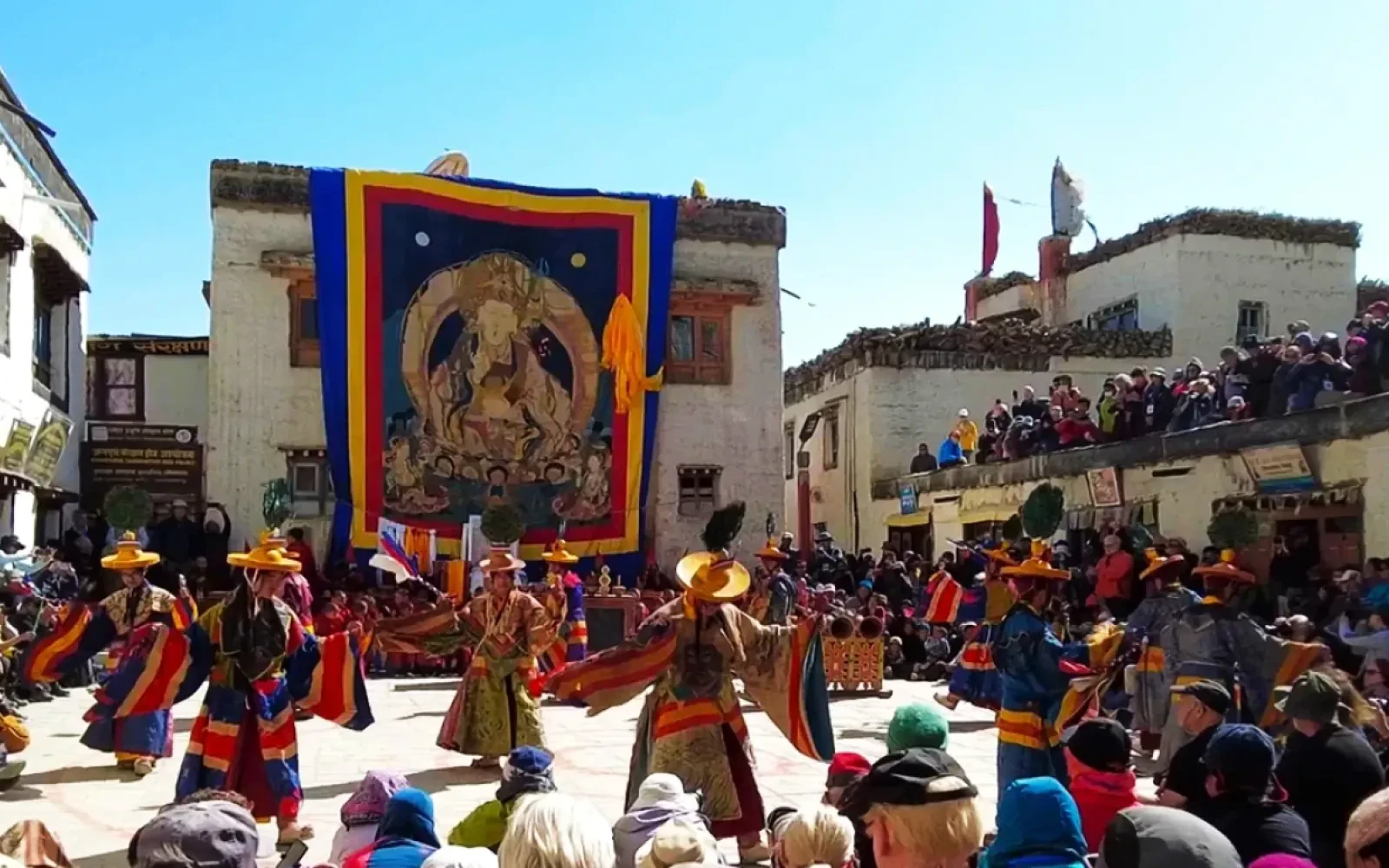
The Tiji Festival is one of the most fascinating and spectacular ritualistic events in the Himalayan range. The festival is annually celebrated in the ancient fortified Lo Manthang, a three-day Buddhist ritual that takes place at a height of 3,810 meters above sea level in the remote Nepal region of Upper Mustang. The festival holds the essence of Tibetan Buddhist traditions, a truly unique experience, as the people have remained remarkably cut off from the effects of the modern world.
The upper mustang, commonly known as "The Last Forbidden Kingdom," was not opened to foreign trekkers until 1992. This geographical seclusion has allowed it to maintain customs that have been lost elsewhere within the Himalayas. Thus, the Ti Ji festival is a genuine cultural experience, not a show for tourists.
The name "Tiji" comes from the Tibetan words "Tempa Chiram," which are translated as "Prayer for World Peace." This event holds the significance of the victory of the deity named Dorje Jono, who was the incarnate form of the compassion of the Buddha, over the demon that was upsetting the Mustang region by altering the course of its water resources.
According to the legend, the father of the demon was said to be a powerful king causing chaos in the entire land. Dorje Jono chased the negative spirits over the Himalayas and defeated them, causing prosperity in the land of Lo. The mask dances of Tiji are the reenactment of this battle between good and evil. This is done for religious purposes and also for prayer for prosperity.
The Tiji festival serves as a purification ceremony for the whole area of Mustang. The ritualistic ceremony is performed by monks of the Sakya school of Tibetan Buddhism, especially those from the Chode Monastery in Lo Manthang. The ritual includes elaborate dances, also known as "cham," performed by monks attired in elaborate masks portraying different gods, demons, and protectors.
Each day of the festival uncovers another set of chapters from the story of Dorje Jono through choreographed gestures and the beating sound of conventional instruments such as cymbals, drums, and long trumpets known as dungchen. These performances are not just stage acts but are seen to possess great spiritual power that accumulates merit and protective blessings.
The locals also actively participate in the celebration through the lighting of butter lamps, prostrating in front of the sacred dances, and receiving blessings from the monks. The festival enhances social cohesion and the Buddhist identity in a global world.
The Tiji Festival is based on the Tibetan lunar calendar and normally takes place towards the end of April or in the first week of May, which corresponds to the full moon in the third month of the lunar calendar. It lasts for three consecutive days.
For 2026, travelers can contact local tour operators or the Nepal Tourism Board for the dates because they get announced well in advance. This festival falls during the trekking season before the monsoon season because the weather conditions during this time and place are favorable with clear blue skies and temperatures ranging between 5°C and 20°C during the day.
Advance planning is a must, as permits for Upper Mustang are limited, as well as availability for accommodations at Lo Manthang. They usually advise planning two to three months prior to the festival schedule.
The trip to Lo Manthang usually starts in Jomsom, which is reachable by plane from Pokhara. The trail from Jomsom follows the ancient salt trade routes across the Himalayas up the Kali Gandaki River.
A typical trekking trail passes through breathtaking landscapes consisting of eroded cliff lines, ridges, and villages. Notable villages passed along the way are Kagbeni, which is the gateway to Upper Mustang Trek, Chele, Samar, Ghiling, Dhakmar, and finally Tsarang. These places can impart information regarding the unique architectural styles of the region and flat-roofed mud houses colored with earthy tones.
The duration of this trek takes about 10 to 14 days. This trail passes through different passes, the highest being the Chora La Pass, which reaches an altitude of about 4,230 meters. This trekking project would be best for those people who are ready to deal with the challenging environment of the Himalayas.
Upper Mustang is a restricted area and requires special permits in addition to the TIMS card and ACAP. Foreigners need to have a Restricted Area Permit (RAP). It costs $500 USD for the initial 10 days, and $50 USD additional for each day beyond that.
Trekkers must trek under the guidance of a registered guide and through a trekking agency, and independent trekking is not allowed in Upper Mustang. A minimum of two people must trek together. Rules are formed to protect the cultural and natural environment and to bring income to the people of Upper Mustang.
The permits can be obtained through trekking agents in Kathmandu and will take 2-3 working days for approval, along with copies of the passport and photographs.
The accommodation available in Upper Mustang is quite simple. There exist teahouses and simple family-run lodges. In Lo Manthang, a number of guest houses provide private rooms sharing bathrooms. During the festival of Tiji, the accommodation gets full very early. It is therefore important to book through your trekking organization.
The normal meal, while trekking, includes dal bhat (lentil soup with rice) noodles, bread, and vegetables. Although its dishes are very simple, it helps Trekers to have enough energy to support high altitude treks. Lo Manthang has some eateries with little variation in menu, especially when it is the time for the festival.
Communication facilities are limited, with sporadic mobile phone coverage and occasional internet access in larger villages. Trekkers should be prepared for extended periods without connectivity.
Visiting the Tiji Festival allows for a fully immersive cultural experience, different from those usually filled with tourists. Locals and visitors alike come together each morning in the royal palace's courtyard or monastery grounds to witness monks emerge in elaborate costumes. The atmosphere combines reverence and festivity as community members socialize while viewing the sacred dances.
The first day covers rituals of purification and the introduction of the deity Dorje Jono. The second day dramatizes the pursuit of the demon by the deity across the Himalayas. The last day ends with the defeat of the demon and the destruction of evil symbolically by the burning or dismantling of the ritual effigies.
Generally, photography is allowed, though respectful distance should be maintained. Further, visitors are requested to dress modestly, remove hats during ceremonies, and not interrupt proceedings. In return, the experience will be a great insight into living Buddhist traditions and the resilience of Himalayan mountain cultures.
Miracle Treks arrange customized Upper Mustang Tiji packages together with permits, 4x4 jeeps, down jacket and sleeping bag rentals, and guides who speak a range of rituals. The log-in brings you to the ultimate in logistics and insights into culture, combined with festival access. To book your 2026 adventure, contact Miracle Treks or visit their website for an advance booking.
During this three-day masked monastery dance, the legendary victory of Dorje Jono over a demon to bring peace and end drought. The final day has monks unveil giant Thangkas and banish a tsampa demon effigy, combining Mustang's communities in ancient Tibetan Buddhist rituals.
This festival takes place between May 14th and 16th, 2026, at Lo Manthang, according to the Tibetan Lunar Calendar, after the end of winter, characterized by pleasant temperatures (15-25°C) in the rain-shadow desert, freezing at night, ideal for traveling before monsoons.
A Restricted Area Permit ($500 for 10 days, plus extensions, from agencies like Miracle Treks with a guide) and ACAP entry ($30) are necessary. Layer clothing, SPFs sunscreen, Diamox for altitude, and copies of passports for check points.
Our travel experts are ready to assist you with any questions.
Send us a message.Have a question before you book? Send your enquiry below and our travel experts will get back with the required information.