
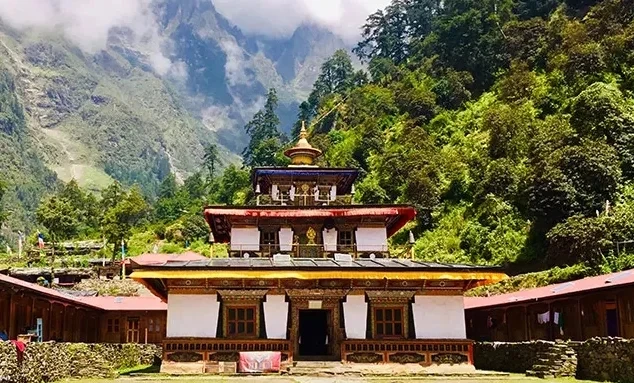
The Serang Gompa Trek is a perfect place to escape from it all in the remote Manaslu region of Nepal, with its challenging trails, Tibetan Buddhist culture, and breathtaking views of the Himalayas. This off-the-beaten-path trek eventually arrives at the remote Serang Gompa monastery, which is also known as a place of peace and quiet amongst the breathtaking gorges and forests in the area.
The Serang Gompa is located in the Gorkha District near the 8,163-meter Mount Manaslu. It is a true hidden gem for those looking for an authentic experience in trekking compared to busy trekking routes, such as Annapurna Base Camp. This trek will take you through many Tibetan-influenced villages and provide you with amazing views of Ganesh Himal with colorful prayer flags blowing in the wind and the monastery, where monks live in solitude, meditating each day.
The trek consists of climbs through the valleys of Budhi Gandaki River, pine trees, and suspension bridges, with incredible panoramic views of peaks such as Shringi Himal and Lamjung Himal. You can either choose to do the Manaslu Circuit in order to complete the full circuit of Manaslu or do the Serang Gompa Trek with the focus on relaxing around the gompa.
The trek is a great option for a physically fit person who has experience in high altitude trekking and will take 7 to 10 days from Kathmandu. While trekking on this trek, you will have the opportunity to experience both authentic culture and raw beauty. The spring and fall seasons are the best times to trek on this route because of the clear skies and favorable hiking conditions.
Between March and May, as well as September and November, the conditions at Serang Gompa are exceptional. The weather is stable, and the scenery is at its most beautiful during these two seasons, whereas June through August brings monsoon rains and poor trail conditions; December through February is characterized by snow-covered trails or passes.
The best months to visit are spring (March to May) due to dry trails to the gompa (~3,500m) with low chances of rain, daytime temperatures of 10-20°C, and nighttime temperatures averaging 0°C.
March is cool and has budding rhododendron trees; April has more flowers than any other month and daytime highs of 10-20°C; May begins with increasing daily tetrads of >15° and from late May onwards is frequented with pre-monsoon clouds with little to no visibility but great conditions for staying at the monastery in a blooming forest.
In autumn (September to November), the weather has stabilized after the monsoons, and September offers improved trail conditions after the monsoon. October has beautiful golden light on Manaslu, and November is cold but not wet. Daytime average temperature: 5-18°C; nighttime average temperature: -5°C..
| Season | Day Temp (°C) | Rain Risk | Highlights |
| Spring | 10-25 | Low | Flowers, clear passes |
| Autumn | 5-18 | Very Low | Epic views, festivals |
| Winter | -5-10 | Snow | Remote solitude |
| Monsoon | 20-30 | High | Lush green, leeches |
The trekking itinerary typically for 10 Days starts in Kathmandu. Travel from Kathmandu with a jeep drive approx. 90 km to Soti Khola (710m). The trek takes approx. 6-8 hours each day to complete approx. 90 km up the Buddhi Gandaki River via the Manaslu circuit trail. An alternate route would be to first travel to Serang Gompa, then rejoin the Manaslu circuit route.
| Day | Start-End | Distance (hrs) | Elevation (m) | Key Sights |
| 3-4 | Soti-Gonggar-Yaru | 3-5 | 710-1,170 | River gorges |
| 5-6 | Yaru-Chisopani-Bihi | 6-7 | 1,610-2,130 | Villages, bridges |
| 7 | Bihi-Serang | 5-6 | 2,130-3,500 | Monastery views |
| 8-10 | Serang-Namrung-KTM | 5-8 | Descent | Forests, return |
Restricted area permits must be applied for separately and provide safety and conservation. Permits issued in Kathmandu (guides required for foreigners).
Estimated total cost/person: 150USD, local agencies will handle permits and fees; two copies of passport are required; no drones unless granted written permission; leave no trace during your stay on the trails.
If you are planning to go trekking on challenging terrain for a duration of 4 to 6 weeks before you depart or if you want to do cardio workouts to prepare yourself to go trekking, you will have to include stair or hill cardio workouts into your fitness program. You are allowed to ascend up to 400 metres per day with rest days at Bihi during your trek and to drink at least 4 litres of water per day; if you begin to develop AMS symptoms, you will have to descend to a lower altitude than you were at before you developed the symptoms.
Each of the trails that you will be hiking have been marked but are very faint; GPS apps (i.e. Maps.me) will serve as back up for the trail markers. You will also be required to have a licensed guide while you are on the trek (USD 25-35/day) who will have the necessary permits, knowledge of the culture, and will be able to assist in any emergencies while you are on the trek as they have the first aid knowledge but you must have one per group. You will also not be permitted to go on a foreign trek by yourself.
You must respect the gompa; you must circumambulate the gompa clockwise; you must wear appropriate clothing while in the gompa; you must not take photos inside the gompa without asking permission from the monks. You could see blue sheep and Himalayan monal; there are leeches that you will get if it starts to rain; you can use salt to help.
You should budget between USD 800-1,200/person for your trip (including your guide, food and permits, and transportation). Teahouses charge between NPR 300-800/night to stay at and dal bhat is the main dish to eat while on your trip; you should insure yourself for potential helicopter evacuations (average: USD 5,000).
The 17th century Serang Gompa, which is located in the Tsum Valley, is a Tibetan monastery with murals of Manjushri and performs daily ceremonies there; many of the villages along the porch and the trek to Bihi have Gurung and Tibetan influences (i.e., mani walls, yak cheese) with plenty of activity for Losar (the spring), or the autumn harvest season in the villages; these activities add vibrancy to the culture. The teahouses along the trail allow you to converse with both the Tibetan and Gurung families regarding their migration from Tibet to their present residence (the airport has a long runway where you will land if you fly into Katmandu), and to support the local community ethically.
The distance, steep (uphill), remote location, altitude, and quickly changing weather conditions can test your endurance while you are on the trip; therefore if you are a beginner hiker/camper, you may want to do the Tsum Valley extension to the Manaslu circuit; you will be able to do the entire Manaslu circuit (approximately 18 days, Larkya La at 5,160m) if you do the trek but you will have more of an adventure if you do.
You will discover incredible serenity, unspoiled beauty, and unique cultural experience within the heart of Manaslu while trekking on the Serang Gompa Trek! The Trek is truly transformative for both body and spirit.
Plan your trip with Miracle Treks for guided trekking services, hassle-free permit processing, and personalized itineraries. Book now at miracletreks.com or contact us for assistance today and help unlock the true magic of the monasteries in Nepal!
