
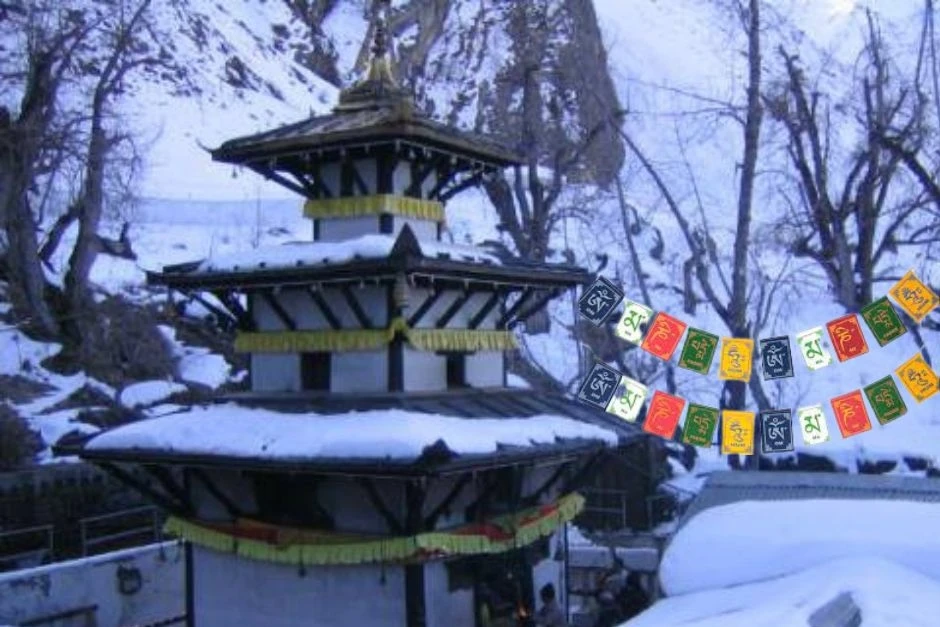
Nestled high in the Himalayas at an awe-inspiring altitude of 3,710 meters (12,171 feet) lies a destination that transcends ordinary travel. Situated at the base of the formidable Thorong La mountain pass in the Mustang district, the sacred Muktinath Temple is a beacon of spiritual liberation, natural beauty, and ancient mythology. Whether you are a devout pilgrim seeking salvation or an adventure enthusiast drawn to the rugged landscapes of the Himalayas, undertaking a Muktinath pilgrimage offers an experience unlike any other in the world.
This remote sanctuary is not just a destination; it is a profound journey into the heart of faith and nature. Below, we dive deep into everything you need to know about this high-altitude haven, from unraveling its rich history to planning the ultimate travel itinerary.
To truly appreciate this destination, one must understand the profound Muktinath history that spans thousands of years. Known in Hindu scriptures as Moksha Kshetra, the Moksha Kshetra spiritual importance cannot be overstated. "Moksha" means liberation or salvation, and "Kshetra" means holy place. Devout Hindus believe that bathing in the waters here guarantees liberation from the endless cycle of birth and rebirth.
The primary deity worshipped inside the main pagoda-style Muktinath temple is Lord Vishnu. According to Hindu mythology, Lord Vishnu was cursed by Vrinda (the wife of Jalandhar) to become a stone. Thus, he resides in this sacred region in the form of Shaligram (ammonite fossils), which are abundantly found along the Kali Gandaki River basin just below the temple.
Furthermore, this site holds immense importance for followers of Goddess Shakti. It is revered as one of the 51 Shakti Peeth sites in Nepal and India. Legend states that after the death of Goddess Sati, Lord Shiva wandered the universe carrying her burning body. Various body parts fell to the earth, creating sacred energetic points known as Shakti Peeths. It is believed that Sati’s forehead fell precisely at the Muktinath location, cementing its status as a powerhouse of divine feminine energy.
One of the most beautiful aspects of the Mustang Muktinath temple is its role as a unifying sanctuary. In a world often divided by religious differences, Muktinath stands as a shining example of Buddhist and Hindu religious harmony.
While Hindus worship the site as a supreme place of Lord Vishnu, Tibetan Buddhists refer to the area as Chumig Gyatsa, which translates to "Hundred Waters." For Buddhists, the Muktinath significance is deeply tied to Tantric Buddhism and the great sage Guru Rinpoche (Padmasambhava), who is said to have meditated here on his way to Tibet. Buddhists venerate the central deity as an incarnation of Avalokiteshvara, the Bodhisattva of Compassion. The seamless coexistence of Hindu priests (Brahmin) and Buddhist nuns (Jhumas) tending to the temple complex is a heartwarming testament to Nepal's peaceful spiritual syncretism.
When you step into the sacred precinct, the sheer spiritual gravity of the Muktinath temple Nepal is palpable. The complex is expansive, featuring several smaller shrines, ancient trees, and stunning panoramic views of the Nilgiri and Dhaulagiri mountain ranges.
Behind the main temple courtyard, visitors will find a spectacular semi-circular wall featuring 108 stone spouts carved in the shape of cow heads. The significance of 108 holy water sprouts is deeply rooted in Eastern philosophy, as the number 108 is considered highly auspicious in both Hinduism and Buddhism (representing the 108 beads of a mala, among other cosmic alignments). Ice-cold water from the Kali Gandaki River flows continuously through these spouts.
Often referred to locally and online as the Muktinath temple 108 godawari nepal (with godawari referring to a holy spring or spout), pilgrims brave the freezing temperatures to run under the water of all 108 spouts. It is believed that this act physically and spiritually washes away a lifetime of sins.
Just a short walk south of the main temple sits the Jwala Mai Temple (Goddess of Fire). This unassuming Tibetan-style monastery houses one of the most fascinating natural phenomena in the Himalayas: the Jwala Mai eternal flame mystery. Inside, behind a tattered curtain, visitors can witness three eternal flames burning continuously out of the rock, directly over a stream of flowing water.
Science explains this as naturally occurring underground methane gas venting to the surface, but to the faithful, it is a miraculous representation of the divine, where the opposing elements of fire, earth, and water peacefully coexist.
Because of the striking contrast between the golden temple architecture, the prayer flags fluttering in the harsh wind, and the snow-capped Himalayan backdrop, capturing Muktinath temple photos is a highlight for many visitors. Whether you are an amateur with a smartphone or a professional aiming to capture the perfect Muktinath temple Nepal photos, the golden hours of early morning and late afternoon provide breathtaking lighting. Remember to respect local customs; while photography is highly encouraged outside, taking pictures inside the inner sanctums of the temples is strictly prohibited.
Organizing your Muktinath travel requires careful logistical planning due to the rugged terrain and high altitude. Understanding the Muktinath temple location is the first step. It is located in the Muktinath Valley at the foot of the Thorong La mountain pass, within the Mustang district of north-central Nepal.
Figuring out how to reach Muktinath from Kathmandu offers several options depending on your budget, time constraints, and appetite for adventure. The journey typically goes from Kathmandu to Pokhara, and then onward to the Mustang region.
1. Flight vs Jeep Travel to Jomsom:
2. The Final Leg: From Jomsom, you can hire a local jeep to drive you up to the village of Ranipauwa, which sits just below the temple complex. From the jeep drop-off point, it is about a 30-minute uphill hike to the temple itself. You can also hire a horse if the walk is too strenuous.
For those who prefer walking, a Muktinath tour is often the culmination of a broader trekking adventure. The iconic trekking route from Kagbeni to Ranipauwa is a favorite among hikers. Starting from the medieval village of Kagbeni the gateway to Upper Mustang trekkers hike up the arid, moon like landscape for about 3 to 4 hours to reach the temple.
Furthermore, Muktinath serves as a crucial milestone on the famous Annapurna Circuit trekking itinerary. Trekkers crossing the treacherous 5,416-meter Thorong La pass view Muktinath as their first major rest stop and a welcome sight of civilization and spiritual comfort after days of arduous high-altitude hiking.
A successful Muktinath pilgrimage hinges on preparing for the administrative and environmental realities of the Mustang region.
Because the temple is located within a protected conservation area, independent travelers and guided groups alike must focus on obtaining ACAP and TIMS permits before their journey.
Choosing the best time to visit Mustang Nepal will make or break your trip. The optimal windows are during the spring (March to May) and autumn (September to November). During these months, the skies are generally crystal clear, providing magnificent views of the Himalayas, and the daytime temperatures are pleasant.
You should be highly cautious regarding winter weather conditions in lower Mustang. From December to February, temperatures plummet well below freezing, and heavy snowfall can block roads and the temple pathways entirely. While the stark white landscape is undoubtedly beautiful, many local tea houses close down, and the freezing water makes bathing under the 108 spouts a dangerous endeavor. The monsoon season (June to August) is also tricky; while Mustang lies in a rain shadow and receives less rain than the rest of Nepal, the roads leading up to Jomsom from Pokhara are prone to severe landslides.
Travelers will find a variety of accommodation options in Ranipauwa village, the bustling settlement located right below the temple complex. Over the past decade, Ranipauwa has developed significantly to cater to the influx of domestic and international pilgrims.
Because the temple is situated at over 3,700 meters, altitude sickness also known as Acute Mountain Sickness (AMS) is a very real threat. Taking proactive steps toward preventing altitude sickness in Mustang is vital for a safe trip.
Tips for Preventing AMS:
The weather in the Himalayas is notoriously unpredictable. The intense sun can cause sunburns during the day, while powerful winds drop the temperature to freezing levels by late afternoon. A well-thought-out packing list for high altitude pilgrimage should include:
Ultimately, a trip to Muktinath is so much more than checking a destination off a travel bucket list. It is an immersion into a landscape where the earth touches the sky and where human devotion has carved out a sanctuary in one of the most inhospitable environments on the planet.
From the sheer thrill of a rugged jeep ride up the Kali Gandaki gorge to the quiet, meditative peace found while watching the eternal flame of Jwala Mai, the experiences gathered here leave an indelible mark on the soul. The harmony between the Hindu and Buddhist traditions reminds visitors of a universal truth: that despite our varied paths, the pursuit of compassion, peace, and spiritual liberation is a shared human endeavor.
Whether you return home with a camera full of breathtaking photographs, a body tested by high-altitude trekking, or a spirit cleansed by the freezing waters of the 108 holy spouts, the sacred journey to Muktinath will resonate within you for a lifetime. Plan your trip with care, respect the raw power of the Himalayas, and open your heart to the deep, resonant magic of the Moksha Kshetra.
