
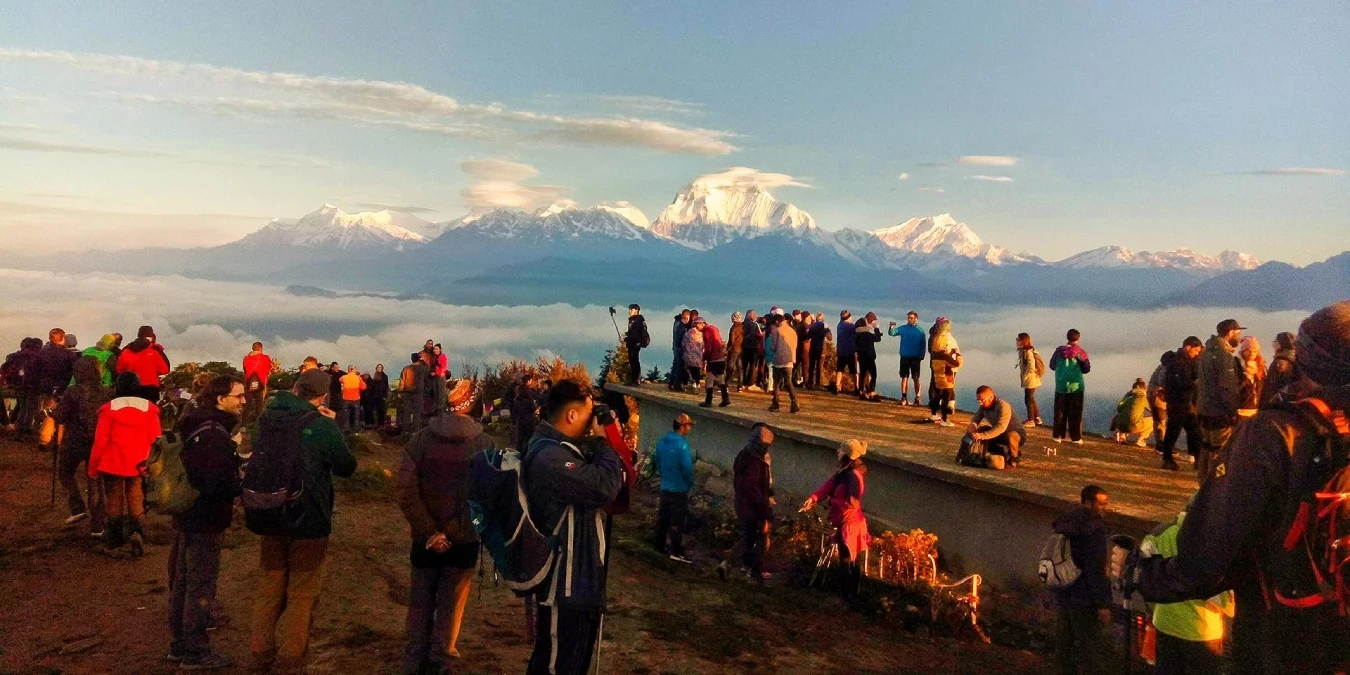
Nepal’s beautiful landscapes make it a year-round trekking destination, but timing is key to ensuring optimal safety and scenic views while maximizing your trekking and tourism experience. Nepal’s two primary trek seasons, Spring and Autumn, provide the best weather and visibility through clear skies, while the rest of the seasons provide opportunities for unique trekking experiences such as having less tourist traffic than during the peak season.
The different seasons have a profound impact on trekking and touring in Nepal. Spring (March–May) and autumn (September–November) are the two prime seasons to trek to high altitude treks such as the Everest Base Camp and the Annapurna Circuit due to mild weather (Daytime temperatures 5 - 20 degrees Celsius) and little precipitation. In contrast, the monsoon season (June-August) is the perfect opportunity for trekking at lower elevations due to lush green vegetation, but has wet/muddy conditions due to rainy weather. The winter (December - February) offers crisp clear air along with many shorter hikes, however, high passes may be inaccessible due to cold weather (as low as -16 degrees Celsius).
The trekking seasons also coincide with cultural festivals such as the Dashain festival in the autumn, so there are many additional opportunities to enhance a tour when trekking through Nepal. Always verify all trekking permits for your trekking route and take into account any acclimatization needs of your trekking team, since weather patterns will vary based on elevation. For example, the weather in the Kathmandu Valley is relatively warm year-round.
Springtime in Nepal brings flowers everywhere, including rhododendrons blooming on every trail that leads to many of the biggest peaks in the world, including both Annapurna and Everest. During the spring months, the weather is pleasant, with average daytime highs between 10-20 degrees Celsius and overnight lows dropping to near freezing temperatures (0-5 degrees Celsius) or below. After winter's haze has cleared away, you can expect long bright days where you can continue to see the magnificence of these mountains. As with the fall trek season, don't miss out on the opportunity to start your trek in the spring by reserving your space on the trails and in the lodges early.
Some of the Best Treks and Tours to Enjoy in Springtime:
| Month | Avg Temp (°C) | Pros | Cons |
| March | 5-15 | Clearing skies, fewer crowds | Residual cold at altitude |
| April | 8-18 | Peak blooms, clear views | Building crowds |
| May | 10-20 | Warm days, long hikes | Pre-monsoon clouds |
Spring is an excellent time to hike if you have moderate levels of fitness, but you should also be sure to pack sufficient clothing layers (to accommodate for temperature variation) as well as rain gear because there are occasional rainy days.
Autumn features crystal clear skies after the season of the monsoon. Freshly washed from the storm left behind by the monsoon, you will experience 360 degrees of stunning views of the Himalaya. The temperature during autumn will range from 8 to 22 degrees Celsius during the day with stable weather. However, there are still very few flowers which means that there are many more opportunities for photography and for a greater challenge during your trekking than in the monsoon months. The temperature will drop to approximately 5 degrees Celsius in the evenings, providing excellent opportunities for stargazing from passes and campsites.
| Month | Avg Temp (°C) | Pros | Cons |
| Sept | 12-22 | Balanced crowds, fresh air | Early rains possible |
| Oct | 8-18 | Ultimate clarity, festivals | Peak pricing |
| Nov | 5-15 | Crisp, quiet trails | Cooling nights |
Families or photographers find that autumn has the best conditions for enjoying the numerous summer trails & teahouses, which are open and busy at this time of year.
Although the weather can be chilly at high altitude (a day at this elevation typically hovers around 4 degrees Celsius) during winter, the lower amounts of tourists and pristine snow attract the hardy adventurer. While Kathmandu and Pokhara have very nice, mild weather (3° - 12°C), it can also be excellent for cultural tours. The high Himalayas (above 4,000 meters) may be at risk of closure during the winter, so it's best to do any trekking on trails below that elevation.
Pack and wear your thermals and crampons for a great reward for those who seek solitude.
| Month | Avg Temp (°C) | Pros | Cons |
| Dec | 3-12 | Festive vibes | Short days |
| Jan | 2-10 | Snow magic | Extreme high cold |
| Feb | 3-12 | Warming up | Possible snow blocks |
Highlands wet (15-26°C) from rain, landslide danger - recommended to avoid large trekking routes, however; lowlands have lots of green, rain-shadow areas and also have lovely sights.
Leeches/mud require gaiters and repellent. Sept/Oct have the best prices for off-peak tourist seasons.
| Month | Avg Temp (°C) | Pros | Cons |
| June | 15-25 | Lush scenery | Wet trails |
| July | 16-26 | Low costs | Landslide risks |
| Aug | 15-25 | Vibrant flora | Clouded peaks |
| Trek | Best Season | Alt (m) | Duration | Why Best [Sources] |
| Everest Base Camp | Spring/Autumn | 5,364 | 12-14d | Clear Kala Pattar views |
| Annapurna Circuit | Spring/Autumn | 5,416 (pass) | 14-21d | Stable Thorong La |
| Manaslu Circuit | Autumn | 5,160 (pass) | 14-18d | Remote clarity |
| Poon Hill | All, esp. Winter/Spring | 3,210 | 4-5d | Sunrise panoramas |
| Langtang Valley | Spring/Winter | 4,984 | 7-10d | Culture + views |
Be sure to pack layers-Base thermals, fleece jacket, and waterproof shell/jacket and consider the following for seasons when trekking in Nepal:
Plan your trip around Tihar (the festival of autumn lights), Losar (the Tibetan New Year in February), and Teej (the festival of women during the monsoon). Be respectful when visiting monasteries and ensure women cover their arms and shoulders. Any required permits (TIMS and national park permits) may be obtained through one of the local trekking or tour agencies.
The season you choose for travel to Nepal will help determine the magic you experience. Whether your journey will be across the Great Himalayas (Everest) to the Annapurna region or a custom tour, the experienced guides at Miracle Treks and Expeditions (Thamel, Kathmandu, Nepal) will help you make this a memorable experience.
Miracle Treks has provided outdoor adventure tours to travellers since 2007 and two years under the name Miracle Treks. Miracle Treks can obtain all permits, handle logistics and create custom packages at a reasonable cost. For more information about miracle treks and expeditions, please visit our website and book your adventure today!
