
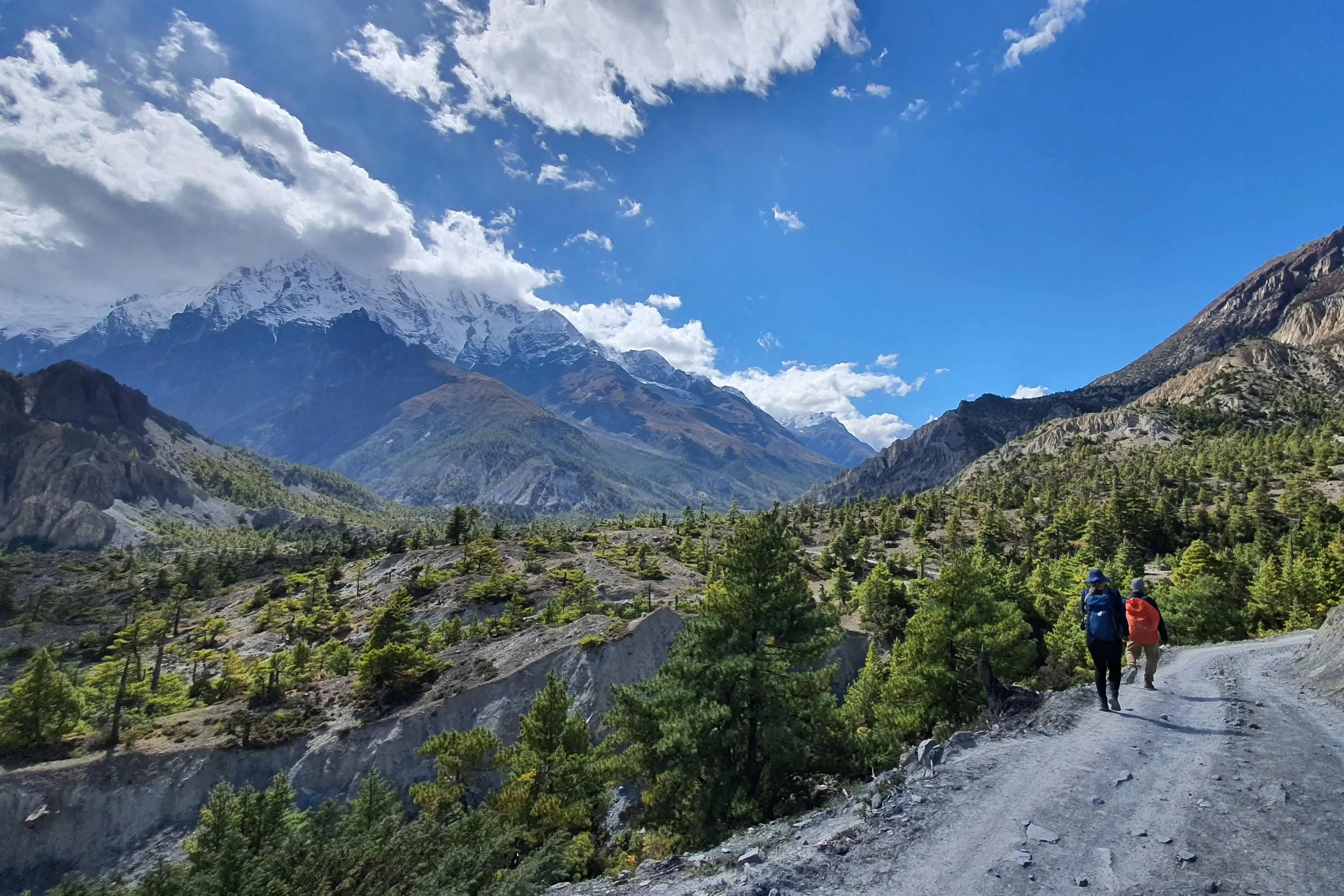
Annapurna Circuit Trek in Nepal is considered as one of the most renowned trekking paths in Nepal. From emerald valleys, lush green fields to high altitude deserts, it includes everything with the backdrop of the majestic Annapurna range. Most trekkers think of avoiding June because it falls under the monsoon season in Nepal. But with the proper planning and the mindset, Annapurna Circuit Trek in June could be a very exciting and adventure-filled trip especially if you plan with Miracle Treks, a trusted Nepali operator.
In this guide, you'll get to know about the weather of June on the Annapurna Circuit, the trails and its routes, along with practical plans and suggestions so that you make informed decisions regarding when to do this trek.
June is regarded as the beginning of pre-monsoon/early-monsoon in Annapurna Circuit. The weather at this point is variable and transitional, having a lot of variation ranging from blue sky morning, cloudy afternoon and rains.
Daytime is quite hot and humid, with temperature between 20-28 °C and nighttime being mild with temperature of 10-15 °C.
Here, the weather will be slightly cooler and drier, especially in the rain shadow zone on the Mustang side of Thorong La Pass. Average daytime temperatures are normally in the range of 10 to 16 °C, while nighttime temperatures may even be near freezing or even below 0 °C at Thorong La.
There will still be some cloudy, foggy, and possibly snowy weather, especially at Thorong La (5,416 m) and higher elevation locations, although it will probably have fewer clouds and clearer skies than the lowland, pre-monsoon trekking route.
All in all, rains will be frequent but not persistent. High elevation treks will be considerably drier and clearer than their counterpart trekking routes at lower elevations and valley floors.
A classic Annapurna Circuit trek starts either from Besisahar or Syange at Marshyangdi Valley, climbs towards Manang, crosses Thorong La Pass at 5,416 m, and finally exits through Muktinath, traversing the Upper Mustang desert area until reaching Jomsom and ending at Pokhara.
Distance: approx. 160 to 230 km, depending on specific trail variations and optional detours.
Duration: approx. 13 to 18 days.
The trail goes through subtropical green forests, rice fields, and attractive villages of Gurung and Thakali people. The trail is highly exposed to rain and mud in June, and expect slippery crossings of the rivers and trail repairs due to landslides.
With increasing altitude, the climate becomes more dry, and the vegetation consists mainly of alpine meadows. Although June is the rainy season, higher altitudes have less humidity and cooler temperatures.
This part is the high-altitude peak of the entire trekking path. The trail passes through the area called rain-shadow zone, which means that the route goes through the Trans-Himalaya, receiving usually less rainfall and more sunny days than on the Marshyangdi River side. Nevertheless, weather may be unstable and even snowing at Thorong La in June.
Descending from the high mountain, you will enter the more arid and eroded landscape of Upper Mustang, characterized by fewer clouds and less rainfall. The rainbreak is formed by Kali Gandaki Valley and Jomsom town.
It's safe to say yes, but there are several things to consider.
June is not part of the "popular" months (October-November and March-April) during which there will be many more people around and you may face higher per-person prices due to higher demand.
The pre-monsoon rains contribute to lush greenness of the low altitude forests and cultivated lands, and the rhododendron forests may still bloom.
The rain-shadow areas at higher altitudes will remain rather dry compared to the low elevation parts of the route.
Hike through mud and flooded streams. Expect the trail itself to be affected by recent rains in such parts as the Marshyangdi section.
Regular rainfall and clouds will likely block your view of Annapurna II, IV, Lamjung, and other mountains.
The journey remains challenging in terms of its difficulty level (4,000 m+ climb with a maximum height of 5,416 m at Thorong La) because of long days, changing weather conditions, and fatigue, which can lead to an increased chance of altitude sickness due to rushed acclimatization.
This is a conservative yet flexible itinerary that works very well in June with additional rest days and acclimatization days:
Day 1: Driving/starting trek from Besisahar to Chame.
Day 2: Chame to Pisang (start of high-altitude).
Day 3: Pisang to Manang.
Day 4: Rest and short walk in Manang.
Day 5: Manang to Yak Kharka.
Day 6: Yak Kharka to Thorong Phedi.
Day 7: Thorong Phedi to Muktinath via Thorong La Pass.
Day 8: Muktinath to Jomsom.
Day 9: Jomsom to Pokhara by driving/flight.
Days 10 to 14: Buffer days for dealing with weather-related issues, canceled flights, and general acclimatization – especially relevant if Jomsom flights are fogged out or the trail becomes muddy.
For an organized group tour with an agency, it is highly advisable to have 2-3 buffer days incorporated into the itinerary in June.
Bring a rainproof jacket, rain-proof trousers, good hiking shoes, and fast drying clothing for trekking. At higher elevations, pack thermal wear, a fleece, and a down jacket that will keep you warm even at low temperatures of ‑5°C or lower because the nights can get very cold at Thorong La, even in June.
Do not rush to make it across the pass before it starts raining. Take at least one full acclimatization day in Manang. Remember that trekking is quite tough to very challenging, with hard days and steep climbs ahead.
Strive to set out from your teahouses around 6:00-7:00 in the morning. In June, there are increased odds of clouds forming and it starts to rain during the afternoon.
Given the uncertain weather conditions, trail difficulty, and possible effects at altitude, hiring an experienced guide from a company like Miracle Treks is recommended. Hiring a quality guide service will enable you to:
Communications can be unreliable, especially during June, and flights may face cancellations and delays. Having some extra cash and copies of your permit and passports will help you manage changes in case they occur in Pokhara, Jomsom, or on the trail.
It is very easy to suffer from dehydration or become exhausted from hiking in the rain or at altitude. Drink 3-4L of water every day, choose warm energy-rich food, and do not drink alcohol in areas of higher altitude to avoid Altitude Mountain Syndrome.
Annapurna Circuit trek in June will have cloudy days. Plan on enjoying the foggy views from the peaks and take photos from below while exploring the traditional villages of Nepal.
June isn’t for everyone when it comes to trekking the Annapurna Circuit, but for those seeking low season discounts, less competition, and a challenge, it could prove to be an interesting option for their Annapurna adventure. For Nepali trekkers, international hikers, and domestic travelers with a June trip on their mind, collaborating with a reliable Nepali tour company such as Miracle Treks could make all the difference in making their adventure enjoyable and safe.
If you are thinking of trekking the Annapurna Circuit in June, Miracle Treks provides flexible Annapurna Circuit tours, guides fluent in English and Nepali, and a good response to weather conditions. Thus, if you are thinking of trekking the Annapurna Circuit in 2026, Miracle Treks could prove to be your best partner in making your trip enjoyable.
Planning to trek the Annapurna Circuit in June? Get in touch with Miracle Treks for a fully backed adventure.
